News

News

Why Is Print Resolution Critical in a Thermal Printer?

2026-09-23 0 Leave me a message

At a busy logistics hub, a thermal printer churns out shipping labels at a rate of 150 per minute. Each label carries a barcode that must be scanned reliably, a tracking number that must be legible, and a recipient address that must be clear. If the print resolution is insufficient, the barcode edges will be fuzzy, the tracking number will be difficult to read, and the label may be rejected by the automated sorting system. In a retail environment, a thermal printer produces receipts that customers will scrutinize for accuracy. A low-resolution receipt may have smudged text, unclear prices, and barcodes that fail to scan. These scenarios illustrate why print resolution is not just a specification in a Thermal Printer; it is a critical determinant of the printer's fitness for its intended application.


Print resolution in a Thermal Printer is measured in dots per inch (DPI) . It defines the number of individual dots that the print head can produce within a one-inch line. The higher the DPI, the finer the detail that can be printed, and the sharper the text, barcodes, and graphics. A Thermal Printer with a resolution of 203 DPI is suitable for general receipt printing. A resolution of 300 DPI is required for high-density barcodes and small text. A resolution of 600 DPI is used for applications that demand the highest level of detail, such as miniature labels for electronics components. This article will explain why print resolution is critical in a Thermal Printer, how it affects print quality and scanning performance, and how to select the right resolution for your specific application. We will also provide detailed specifications for our Thermal Printer products from our factory at Xiamen Peite Electronic Technology Co., Ltd.

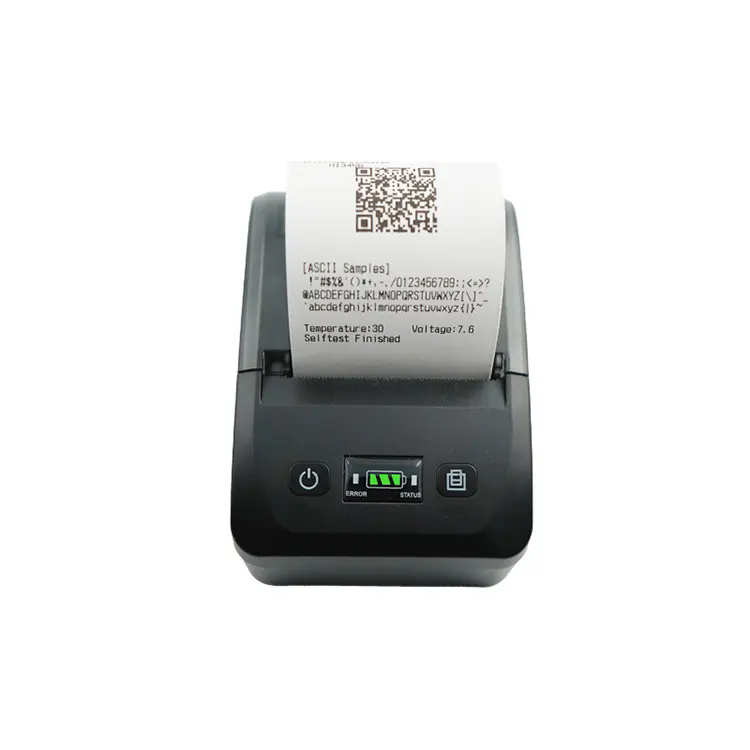
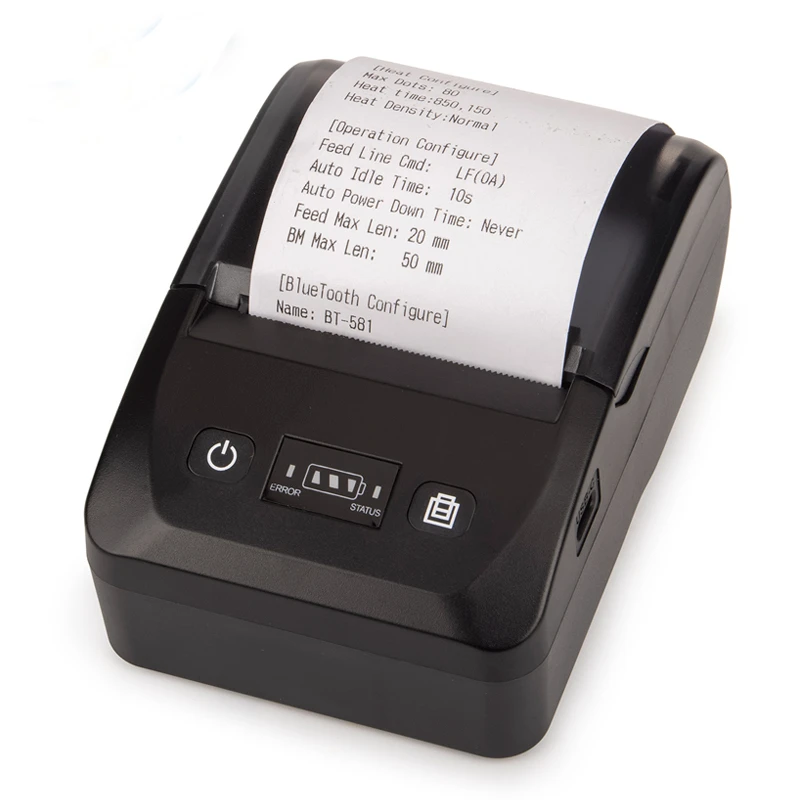
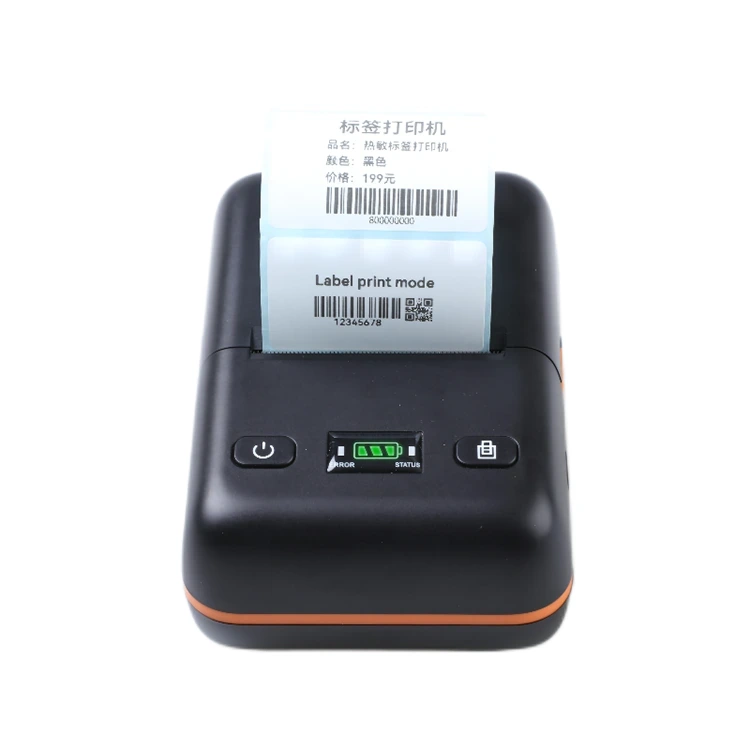
Bluetooth Thermal Receipt Printer


Table of Contents


1. What Is Print Resolution and How Is It Measured?

Print resolution is a measure of the level of detail that a Thermal Printer can produce. It is expressed in dots per inch (DPI) , which is the number of individual dots that the print head can create within a one-inch line. The print head of a thermal printer consists of a linear array of tiny heating elements. When these elements are energized, they heat the thermal paper, causing a chemical reaction that produces a black dot. The number of heating elements per inch determines the DPI. A print head with 203 heating elements per inch produces a resolution of 203 DPI. A print head with 300 heating elements per inch produces 300 DPI. A print head with 600 heating elements per inch produces 600 DPI. The higher the DPI, the smaller the individual dots, and the finer the detail that can be printed.

The relationship between DPI and print quality is straightforward: higher DPI means better quality. However, higher DPI also means higher cost, slower print speeds, and more demanding maintenance requirements. The print head is the most expensive component of a Thermal Printer, and a high-resolution print head is significantly more expensive than a standard one. The print speed is also affected because the printer must energize more heating elements per line, which takes more time. The table below summarizes the relationship between DPI, dot size, and typical applications.

Resolution (DPI) Dot Size (mm) Typical Applications Relative Cost
203 DPI 0.125 Receipts, standard shipping labels, general-purpose printing Low
300 DPI 0.085 High-density barcodes, small text, retail labels, shelf tags Medium
600 DPI 0.042 Miniature labels, electronics components, medical devices, jewelry tags High

At Xiamen Peite Electronic Technology Co., Ltd., our factory manufactures Thermal Printers with resolutions of 203 DPI, 300 DPI, and 600 DPI. We work with our customers to determine the optimal resolution for their specific application, balancing print quality requirements against cost and speed considerations. Our engineering team can provide samples and technical data to assist with the selection process.


2. Why Does Resolution Determine Barcode Scannability?

Barcodes are the lifeblood of modern logistics, retail, and manufacturing. They enable automated identification, tracking, and sorting. For a barcode to be scanned reliably, it must be printed with precise dimensions and sharp edges. The resolution of the Thermal Printer is the primary factor determining whether a barcode meets these requirements. A barcode consists of a series of parallel bars and spaces of varying widths. The scanner reads the barcode by detecting the transitions between the bars and the spaces. If the edges of the bars are fuzzy or irregular, the scanner may misinterpret the width of the bars, leading to a misread or a no-read. This is why resolution is critical for barcode scannability.

The impact of resolution on barcode quality can be understood by considering the concept of the "X-dimension." The X-dimension is the width of the narrowest bar or space in a barcode. For a barcode to be scannable, the X-dimension must be reproduced accurately. If the print resolution is too low, the printer may not be able to reproduce the narrow bars and spaces correctly. For example, a barcode with an X-dimension of 0.25mm requires a resolution of at least 300 DPI to be reproduced accurately. A barcode with an X-dimension of 0.15mm requires a resolution of 600 DPI. The table below summarizes the minimum resolution required for different X-dimensions.

X-Dimension (mm) Minimum Resolution (DPI) Typical Application
0.50 203 Carton labels, pallet labels
0.33 203 Shipping labels, product labels
0.25 300 Retail labels, shelf tags
0.15 600 Electronics components, medical devices
0.10 600+ Miniature labels, jewelry tags

At our factory, we test our Thermal Printers with a range of barcode sizes and symbologies to ensure that they meet the requirements of our customers. We also provide technical support to help our customers optimize their barcode printing, including recommendations for resolution, print speed, and print darkness. Our goal is to ensure that every barcode printed on our Thermal Printer can be scanned reliably, every time.


3. How Does Resolution Affect Text Legibility and Graphics?

While barcode scannability is the most critical application for high-resolution Thermal Printers, text legibility and graphic quality are also important. In many applications, the printed label or receipt must contain human-readable information, such as product descriptions, prices, dates, and instructions. If the text is too small or too fuzzy, it will be difficult to read, leading to errors and customer dissatisfaction. The resolution of the Thermal Printer determines the smallest text size that can be printed legibly. A 203 DPI printer can typically print text as small as 6 points. A 300 DPI printer can print text as small as 4 points. A 600 DPI printer can print text as small as 2 points. The table below summarizes the minimum legible text size for different resolutions.

Resolution (DPI) Minimum Legible Text Size (points) Typical Applications
203 6 pt Receipts, shipping labels, general text
300 4 pt Retail labels, product information, small text
600 2 pt Electronics labels, medical devices, miniature text

Graphics are also affected by resolution. Logos, symbols, and images printed on a Thermal Printer require sufficient resolution to reproduce the details accurately. A low-resolution printer will produce a jagged or pixelated image, while a high-resolution printer will produce a smooth, clear image. This is particularly important for brand logos and other visual elements that must be reproduced with high fidelity. At Xiamen Peite Electronic Technology Co., Ltd., our factory produces Thermal Printers that deliver excellent text legibility and graphic quality at all resolution levels. We can provide samples to demonstrate the print quality for your specific application.


4. What Are the Application Requirements for Different Resolutions?

The choice of resolution for a Thermal Printer is determined by the application requirements. Different applications have different demands for barcode density, text size, and graphic quality. The table below provides a summary of the typical resolution requirements for common applications.

Application Typical Resolution Key Requirements
Receipt Printing 203 DPI Legible text, basic barcodes, high speed
Shipping Labels 203 DPI Standard barcodes, address text, durability
Retail Shelf Tags 300 DPI Small text, high-density barcodes, graphics
Product Labels 300 DPI Small text, barcodes, brand logos
Electronics Labels 600 DPI Miniature text, high-density barcodes, precision
Medical Device Labels 600 DPI Miniature text, barcodes, regulatory symbols
Jewelry Tags 600 DPI Miniature text, barcodes, high-quality graphics

At our factory, we manufacture Thermal Printers for all these applications. We can help you select the right resolution for your specific needs, and we can provide samples to demonstrate the print quality. Our engineering team is available to assist with the selection process and to provide technical support.


5. How Does Print Head Technology Influence Resolution?

The print head is the heart of a Thermal Printer. It is the component that converts electrical energy into heat, which produces the printed image. The resolution of the printer is determined by the density of the heating elements on the print head. A print head with more heating elements per inch produces a higher resolution. The manufacturing of the print head is a precision process. The heating elements are typically made from a thin film of tantalum or a similar material, deposited on a ceramic substrate. The elements are connected to driver ICs that control the current flow. The density of the elements is limited by the manufacturing technology and the physical properties of the materials. The table below summarizes the key print head specifications that affect resolution.

Specification 203 DPI 300 DPI 600 DPI
Heating Elements per inch 203 300 600
Dot Pitch (µm) 125 85 42
Print Width (mm) 48 - 108 48 - 108 48 - 108
Typical Print Speed (mm/s) 150 - 250 100 - 200 50 - 150
Print Head Life (km) 50 - 100 50 - 100 30 - 80

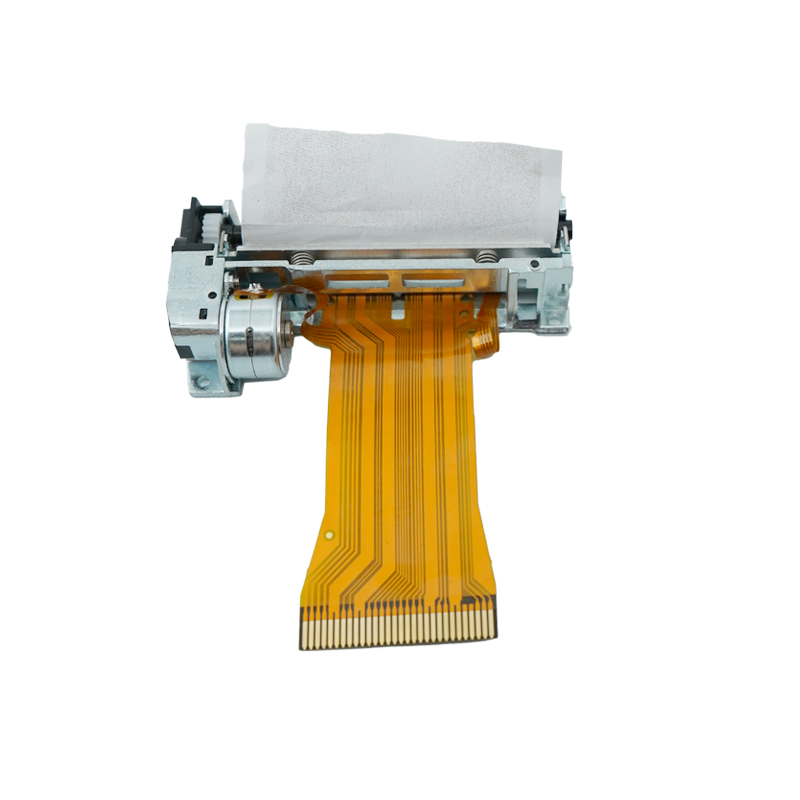
At Xiamen Peite Electronic Technology Co., Ltd., our factory uses high-quality print heads from reputable manufacturers. We test every print head for resolution, uniformity, and durability before it is assembled into a Thermal Printer. We also offer replacement print heads for our printers, ensuring that our customers can maintain their equipment over its entire service life.


6. What Are the Key Specifications of Our Thermal Printer?

The following table provides the key technical specifications for our standard Thermal Printer series. These printers are designed for a range of applications, from receipt printing to high-resolution label printing. Our factory can also produce custom printers to meet specific requirements.

Specification Standard Model High-Resolution Model Ultra-High-Resolution Model
Print Resolution 203 DPI 300 DPI 600 DPI
Print Method Direct Thermal Direct Thermal Direct Thermal
Print Width 108 mm 108 mm 108 mm
Print Speed 250 mm/s 200 mm/s 150 mm/s
Media Type Thermal paper, labels Thermal paper, labels Thermal paper, labels
Media Width 25 - 118 mm 25 - 118 mm 25 - 118 mm
Interface USB, Ethernet, RS-232 USB, Ethernet, RS-232 USB, Ethernet, RS-232
Memory 8 MB SDRAM, 4 MB Flash 16 MB SDRAM, 8 MB Flash 32 MB SDRAM, 16 MB Flash
Dimensions 200 x 180 x 160 mm 200 x 180 x 160 mm 200 x 180 x 160 mm
Weight 1.8 kg 1.9 kg 2.0 kg

At our factory, we manufacture Thermal Printers that meet these specifications and more. We offer a range of options, including cutter modules, peeler modules, and external media holders. We also provide SDKs and drivers for easy integration into existing systems. Our engineering team is available to assist with the selection process and to provide technical support.


7. Frequently Asked Questions (FAQ)

Question 1: What resolution do I need for barcode printing?

Answer: The resolution you need depends on the X-dimension (the width of the narrowest bar) of the barcode. For a barcode with an X-dimension of 0.25mm, you need a resolution of at least 300 DPI. For a barcode with an X-dimension of 0.15mm, you need a resolution of at least 600 DPI. For general-purpose barcodes with an X-dimension of 0.33mm or larger, 203 DPI is sufficient. Our engineering team can help you determine the right resolution for your specific barcode application.

Question 2: Is a higher resolution always better?

Answer: Not necessarily. While a higher resolution provides better print quality, it also comes with trade-offs. Higher resolution printers are more expensive, print more slowly, and may require more maintenance. For applications that do not require high-resolution printing, a standard 203 DPI printer is often the more cost-effective choice. The key is to select the resolution that meets your requirements without over-specifying.

Question 3: How does print speed affect resolution?

Answer: Print speed and resolution are inversely related. Higher resolution requires more heating elements to be energized per line, which takes more time. This means that a high-resolution printer will typically print more slowly than a low-resolution printer. When selecting a Thermal Printer, you need to balance your requirements for print quality and print speed. Our factory offers printers with different combinations of resolution and speed to suit different applications.

Question 4: Can I upgrade the resolution of my Thermal Printer?

Answer: In most cases, the resolution of a Thermal Printer is determined by the print head and cannot be upgraded without replacing the print head and possibly other components. If you need higher resolution, it is usually more cost-effective to purchase a new printer with the desired resolution. Our factory can advise on the best option for your situation.

Question 5: What is the life expectancy of a Thermal Printer print head?

Answer: The life expectancy of a Thermal Printer print head depends on the resolution, the print speed, the media used, and the operating conditions. Typically, a 203 DPI print head has a life of 50-100 km of paper. A 300 DPI print head has a similar life. A 600 DPI print head may have a slightly shorter life due to the finer elements. Proper maintenance, including regular cleaning, can extend the life of the print head. At our factory, we offer replacement print heads and can provide maintenance guidelines for our printers.


8. Conclusion

Print resolution is critical in a Thermal Printer because it determines the quality of the printed output, the scannability of barcodes, the legibility of text, and the fidelity of graphics. The choice of resolution should be based on the specific requirements of the application, balancing print quality against cost and speed. A 203 DPI printer is suitable for general receipt and shipping label printing. A 300 DPI printer is required for high-density barcodes and small text. A 600 DPI printer is used for the most demanding applications, such as miniature labels for electronics and medical devices. At Xiamen Peite Electronic Technology Co., Ltd., our factory manufactures Thermal Printers at all these resolution levels, and we can help you select the right one for your needs.

Whether you are printing receipts, shipping labels, retail tags, or miniature component labels, we have the Thermal Printer that meets your requirements. Our engineering team is available to provide technical support and application assistance. Contact us today to discuss your specific needs and to request a sample or a quote.

Contact Xiamen Peite Electronic Technology Co., Ltd. today to discuss your Thermal Printer requirements and discover how our printers can meet your print resolution needs.

Related News
Leave me a message
X
We use cookies to offer you a better browsing experience, analyze site traffic and personalize content. By using this site, you agree to our use of cookies. Privacy Policy
RejectAccept