News

News

What Are the Main Differences Between 1D and 2D Barcode Scanner Technology?

2026-11-04 0 Leave me a message

A retail operations manager is upgrading the checkout systems across a chain of 40 stores. The current scanners are 1D laser models that have served the business for eight years. They scan traditional barcodes reliably, but they cannot read QR codes, they cannot capture damaged labels, and they cannot scan from a mobile phone screen. The manager is considering 2D imaging scanners as the replacement, but the cost is higher and the specification is more complex. The decision requires a clear understanding of the differences between 1D and 2D Barcode Scanner technology, not just in terms of what they can read, but in terms of durability, connectivity, software integration, and total cost of ownership. For a procurement manager, this is not a simple upgrade; it is a decision that affects checkout speed, customer experience, and long-term maintenance costs.


This guide is written for buyers who need to choose between 1D and 2D Barcode Scanners for retail, logistics, healthcare, or industrial applications. We will compare the two technologies across scanning capability, reading performance, durability, connectivity, software integration, and cost. We will explain the scenarios where 1D is sufficient and the scenarios where 2D is the better investment. We will also provide detailed product parameters from our factory at Xiamen Peite Electronic Technology Co., Ltd. Whether you are equipping a single store or a national distribution network, this guide will help you make an informed decision.

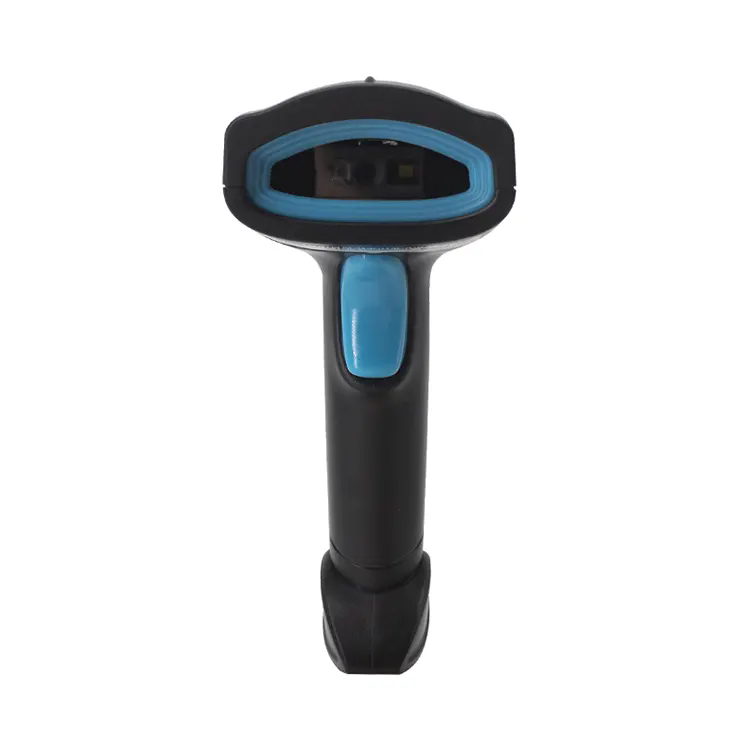
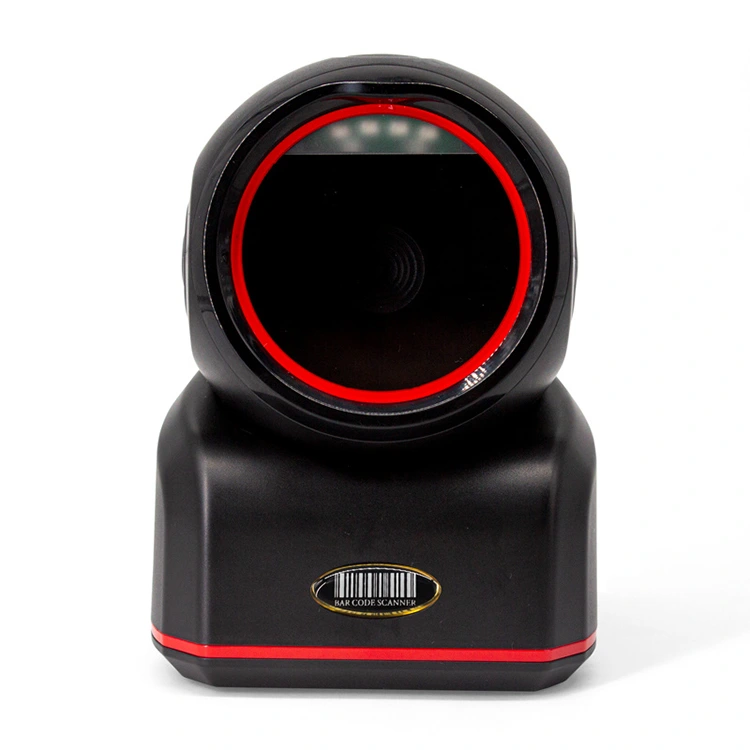
Wireless Barcode Scanner


Table of Contents


1. What Is the Fundamental Difference Between 1D and 2D Scanning?

The fundamental difference between 1D and 2D Barcode Scanner technology lies in the type of barcode they can read and the method they use to capture it. A 1D scanner reads linear barcodes, which encode data in a single row of variable-width bars and spaces. The scanner illuminates the barcode with a light source and measures the reflected light to decode the pattern. A 2D scanner reads two-dimensional barcodes, which encode data in a matrix of squares or dots. The scanner captures an image of the barcode and processes it with a decoding algorithm. This allows 2D scanners to read not only 1D barcodes but also QR codes, Data Matrix codes, PDF417, and other 2D symbologies. The table below summarizes the scanning capability of the two technologies.

Capability 1D Barcode Scanner 2D Barcode Scanner
1D Barcodes (UPC, EAN, Code 128) Yes Yes
2D Barcodes (QR, Data Matrix, PDF417) No Yes
Reading from Screens Limited Yes
Reading Damaged Labels Limited Good
Omnidirectional Reading Limited Yes

At Xiamen Peite Electronic Technology Co., Ltd., our factory manufactures both 1D and 2D Barcode Scanner products. We understand that the choice between the two is determined by the type of barcodes the business needs to read and the environment in which the scanner will be used. Our engineering team can help you select the right technology for your application.


2. How Does Reading Performance Compare in Real-World Conditions?

Reading performance in real-world conditions is where the difference between 1D and 2D Barcode Scanner technology becomes most apparent. A 1D scanner relies on a sweeping laser beam or a linear image sensor. It must be aligned with the barcode to read it, which can slow down checkout and require the operator to position the product carefully. A 2D scanner uses an area image sensor and can read a barcode from any orientation, including at an angle or from a distance. This omnidirectional capability speeds up scanning and reduces operator fatigue. 2D scanners also perform better on damaged, dirty, or poorly printed labels because they capture an image and use advanced decoding algorithms to reconstruct the data. The table below compares the reading performance of the two technologies.

Performance Factor 1D Barcode Scanner 2D Barcode Scanner
Scan Orientation Requires alignment Omnidirectional
Scan Speed Moderate Fast
Damaged Label Performance Poor Good
Screen Reading Limited Excellent
Depth of Field Moderate Wide

At our factory, we design our 2D Barcode Scanner products to deliver fast, accurate reading in demanding environments. Our scanners use high-resolution image sensors and advanced decoding algorithms to read damaged labels, screen-based barcodes, and 2D symbologies. Our goal is to provide our customers with scanners that improve checkout speed and reduce operator effort.


3. What Durability and Ergonomics Factors Should Buyers Consider?

Durability and ergonomics are critical factors in a Barcode Scanner, especially in retail and logistics environments where the scanner is used continuously and may be dropped or bumped. 1D scanners are typically simpler in construction and may use a laser engine that is sensitive to shock and vibration. 2D scanners use solid-state image sensors with no moving parts, which makes them more resistant to shock and vibration. They are often rated for multiple drops onto concrete and have sealed housings that resist dust and moisture. Ergonomically, 2D scanners are often lighter and more compact because they do not require the laser engine and its associated optics. The table below compares the durability and ergonomics of the two technologies.

Factor 1D Barcode Scanner 2D Barcode Scanner
Moving Parts Laser engine (moving mirror) Solid-state image sensor
Drop Resistance Moderate High
Sealing IP42 - IP54 IP54 - IP65
Weight Moderate Light
Ergonomics Good Excellent

At Xiamen Peite Electronic Technology Co., Ltd., our factory designs our Barcode Scanner products for durability and ergonomics. Our 2D scanners are rated for multiple drops and have sealed housings that resist dust and moisture. They are lightweight and designed for comfortable use over long shifts. Our goal is to provide our customers with scanners that withstand the rigors of daily use.


4. How Do Connectivity and Software Integration Differ?

Connectivity and software integration are important considerations when choosing between 1D and 2D Barcode Scanner technology. Both types of scanners are available with a range of interfaces, including USB, RS-232, and Bluetooth. However, 2D scanners often offer additional connectivity options, such as Wi-Fi and Ethernet, and they may support more advanced software features, such as image capture, document scanning, and barcode parsing. 2D scanners can also be used for applications beyond simple barcode reading, such as capturing signatures, scanning ID cards, and reading OCR text. The table below compares the connectivity and software integration of the two technologies.

Feature 1D Barcode Scanner 2D Barcode Scanner
USB, RS-232 Yes Yes
Bluetooth Yes Yes
Wi-Fi, Ethernet Limited Yes
Image Capture No Yes
OCR / ID Scanning No Yes

At our factory, we offer Barcode Scanner products with a range of connectivity options to suit different POS and logistics systems. Our 2D scanners support USB, RS-232, Bluetooth, and Wi-Fi, and they can be integrated with inventory management, point-of-sale, and warehouse management software. Our goal is to provide our customers with scanners that integrate seamlessly with their existing systems.


5. Which Technology Offers Better Total Cost of Ownership?

The total cost of ownership (TCO) of a Barcode Scanner includes the initial purchase price, the cost of maintenance and replacement, the cost of downtime, and the cost of software integration. A 1D scanner typically has a lower initial purchase price than a 2D scanner. However, a 2D scanner may offer a lower TCO over its service life because it is more durable, requires less maintenance, and can handle a wider range of barcode types, reducing the need for multiple scanner models. The table below compares the TCO factors of the two technologies.

Cost Factor 1D Barcode Scanner 2D Barcode Scanner
Initial Purchase Price Lower Higher
Maintenance and Replacement Moderate Low
Downtime Cost Moderate Low
Software Integration Simple More complex but versatile
Recommended For Simple 1D-only environments Multi-symbology, high-use environments

At Xiamen Peite Electronic Technology Co., Ltd., we help our customers evaluate the TCO of 1D and 2D Barcode Scanner technology. We can provide cost estimates and performance data to support the specification decision. Our goal is to help our customers achieve the best balance of initial cost and long-term performance.


6. How Do You Evaluate a Barcode Scanner Supplier?

Evaluating a supplier of Barcode Scanner technology requires a focus on product quality, scanning performance, durability, connectivity, and technical support. The supplier must provide scanners that read the required symbologies accurately and quickly. They must be durable enough to withstand the environment in which they will be used. They must offer the connectivity options required by the POS or logistics system. And they must provide technical support to help with integration and troubleshooting. The table below summarizes the evaluation criteria.

Evaluation Criterion What to Look For Why It Matters
Scanning Performance Symbology support, scan speed, depth of field Ensures accurate and fast reading
Durability Drop rating, IP rating, solid-state design Ensures long service life
Connectivity USB, RS-232, Bluetooth, Wi-Fi Matches the POS or logistics system
Technical Support Integration assistance, troubleshooting Reduces deployment time
Project Experience Retail, logistics, healthcare references Demonstrates capability and reliability

At our factory, we have been producing Barcode Scanner products for over a decade. We offer a range of 1D and 2D scanners with different connectivity options and durability ratings. Our technical team is available to assist with integration and troubleshooting. We invite you to evaluate us against these criteria and to consider us as your partner for Barcode Scanner technology.


7. What Are the Key Product Parameters from Our Factory?

The following table provides the key product parameters for our 1D and 2D Barcode Scanner products. These scanners are suitable for retail, logistics, healthcare, and industrial applications. Our factory can also produce custom scanners to meet specific requirements.

Parameter 1D Barcode Scanner 2D Barcode Scanner
Scan Engine Laser or linear image Area image sensor
Symbologies UPC, EAN, Code 128, Code 39 All 1D plus QR, Data Matrix, PDF417
Scan Speed 100 scans/sec 500 scans/sec
Depth of Field 2 - 30 cm 2 - 50 cm
Drop Rating 1.2 m 1.8 m
IP Rating IP42 - IP54 IP54 - IP65
Connectivity USB, RS-232 USB, RS-232, Bluetooth, Wi-Fi
MOQ 50 pieces 50 pieces
Lead Time 2 - 4 weeks 2 - 4 weeks

At our factory, we manufacture our Barcode Scanner products to meet these specifications and more. We can customize the scan engine, connectivity, and durability rating to suit your specific requirements. Our quality control system includes inspection of raw materials, in-process inspection, and final inspection before shipment. Our goal is to provide our customers with high-quality Barcode Scanner products that meet their scanning requirements.


8. Frequently Asked Questions (FAQ)

Question 1: What is the main difference between a 1D and a 2D barcode scanner?

Answer: The main difference is the type of barcode they can read. A 1D scanner reads linear barcodes, which encode data in a single row of bars and spaces. A 2D scanner reads two-dimensional barcodes, such as QR codes and Data Matrix, which encode data in a matrix of squares or dots. A 2D scanner can also read 1D barcodes, but a 1D scanner cannot read 2D barcodes.

Question 2: Can a 2D scanner read a 1D barcode?

Answer: Yes, a 2D Barcode Scanner can read both 1D and 2D barcodes. This makes it a more versatile choice for businesses that need to read multiple symbologies. A 1D scanner, by contrast, can only read 1D barcodes.

Question 3: Which scanner is better for reading barcodes from a mobile phone screen?

Answer: A 2D Barcode Scanner is the better choice for reading barcodes from a mobile phone screen. The area image sensor in a 2D scanner can capture the screen image and decode it, while a 1D scanner often struggles with the refresh rate and glare of a screen. This is particularly important for businesses that accept digital coupons or mobile payment codes.

Question 4: Is a 1D scanner more durable than a 2D scanner?

Answer: No, a 2D Barcode Scanner is generally more durable than a 1D scanner. 2D scanners use solid-state image sensors with no moving parts, which makes them more resistant to shock and vibration. They are often rated for higher drop heights and have sealed housings that resist dust and moisture. 1D scanners may use a laser engine with a moving mirror, which is more sensitive to shock.

Question 5: Which scanner offers a lower total cost of ownership?

Answer: The answer depends on the application. A 1D scanner has a lower initial purchase price, which may be suitable for simple 1D-only environments. A 2D Barcode Scanner has a higher initial price but may offer a lower total cost of ownership over its service life because it is more durable, requires less maintenance, and can handle multiple symbologies, reducing the need for multiple scanner models. Our team can help you evaluate the TCO for your specific application.


9. Conclusion

The choice between 1D and 2D Barcode Scanner technology depends on the barcodes the business needs to read, the environment in which the scanner will be used, and the total cost of ownership. 1D scanners are suitable for simple, low-chloride applications where only linear barcodes are used. 2D scanners offer omnidirectional reading, screen reading, damaged label performance, and greater durability, making them the better choice for multi-symbology environments and high-use applications. At Xiamen Peite Electronic Technology Co., Ltd., our factory manufactures both 1D and 2D Barcode Scanner products to meet the most demanding requirements. We work with our customers to select the right technology for their specific application.

Whether you are equipping a retail checkout, a warehouse, or a healthcare facility, we invite you to contact us to discuss your requirements. We can provide samples, technical data, and customized solutions. Our commitment to quality and customer satisfaction has made us a trusted partner for Barcode Scanner buyers around the world.

Contact Xiamen Peite Electronic Technology Co., Ltd. today to discuss your Barcode Scanner requirements and discover how our 1D and 2D scanners can meet your scanning needs.

Related News
Leave me a message
X
We use cookies to offer you a better browsing experience, analyze site traffic and personalize content. By using this site, you agree to our use of cookies. Privacy Policy
RejectAccept