News

News

Which Barcode Scanner Decoding Formats Support Retail and Industrial Applications?

2026-11-10 0 Leave me a message

A barcode scanner is only as useful as the symbologies it can decode. A scanner specified for a retail checkout lane may read UPC and EAN labels at high speed, but fail on a laser-etched Data Matrix code on a machined part. A scanner built for industrial traceability may read DPM codes on metal, but struggle with the small, high-density QR codes on a digital receipt. The decoding format, not the scan engine alone, defines the application fit. For a procurement manager sourcing Barcode Scanners, the decoding format list is the first technical filter, and the second is the decoder architecture that supports that list at the required speed and reliability.


Retail and industrial applications have different symbology requirements, different label conditions, and different operator expectations. Retail formats are dominated by the GS1 family: UPC-A, UPC-E, EAN-8, and EAN-13, with Code 128 for weight and price labels and QR codes for digital engagement. Industrial formats include Code 39, Code 128, Interleaved 2 of 5, Data Matrix, PDF417, and direct part marking codes that are laser-etched or dot-peened onto the surface. A scanner that supports all of these formats in a single device is a powerful tool for mixed environments, but a scanner that supports the specific subset required by the application is often more cost-effective. This article explains which formats matter for retail and industrial use, how 2D and DPM codes change the requirement, and how buyers should specify the decoding capability before placing an order.

2D Barcode Scanner


Table of Contents


1. What Decoding Formats Do Retail Scanners Need to Support?

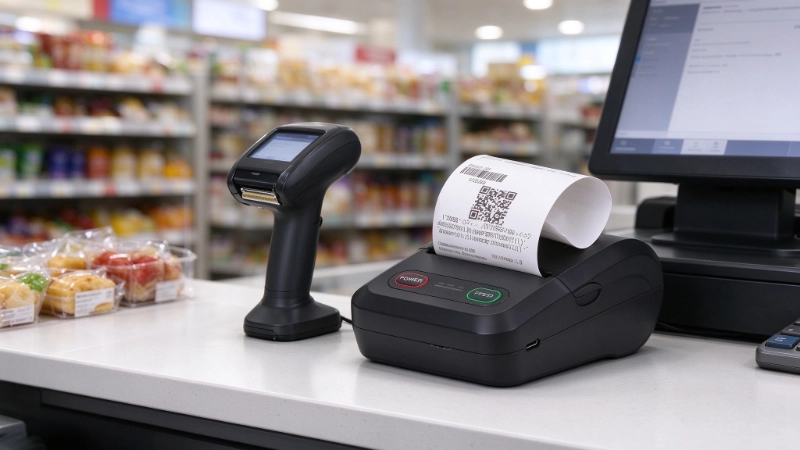
Walk into any supermarket, and the scanner at the checkout reads a UPC-A symbol on a cereal box. Behind the counter, a scale prints a Code 128 label with the weight and price. At the self-checkout, a QR code on the screen links to a digital receipt. Each of these is a different decoding format, and the scanner must handle all of them as part of the retail workflow. The table below lists the core retail formats and where they are used.

Decoding Format Typical Retail Use Scanner Requirement
UPC-A Packaged consumer goods in North America High-speed 1D decoding, omnidirectional scan
UPC-E Small packages, zero-suppressed UPC 1D decoding with UPC-E expansion
EAN-8 Small packages in Europe and global markets 1D decoding, EAN-8 support
EAN-13 Retail products in Europe and many other regions 1D decoding, EAN-13 support
Code 128 Weight and price labels, internal retail labels 1D decoding, high-density support
Code 39 Internal inventory labels, loyalty cards 1D decoding, alphanumeric support
QR Code Digital receipts, promotions, product information 2D imaging, QR decoding

The retail environment imposes additional requirements beyond the format list. The scanner must decode at the speed of the checkout lane, often in under 100 milliseconds. It must read labels that are curved, wrinkled, or partially obscured. It must handle ambient light from store windows and overhead fixtures. And it must be durable enough to survive drops, spills, and daily handling. A retail scanner that supports the formats but decodes slowly will slow the checkout lane. A retail scanner that supports the formats but cannot handle a crumpled label will create operator frustration.

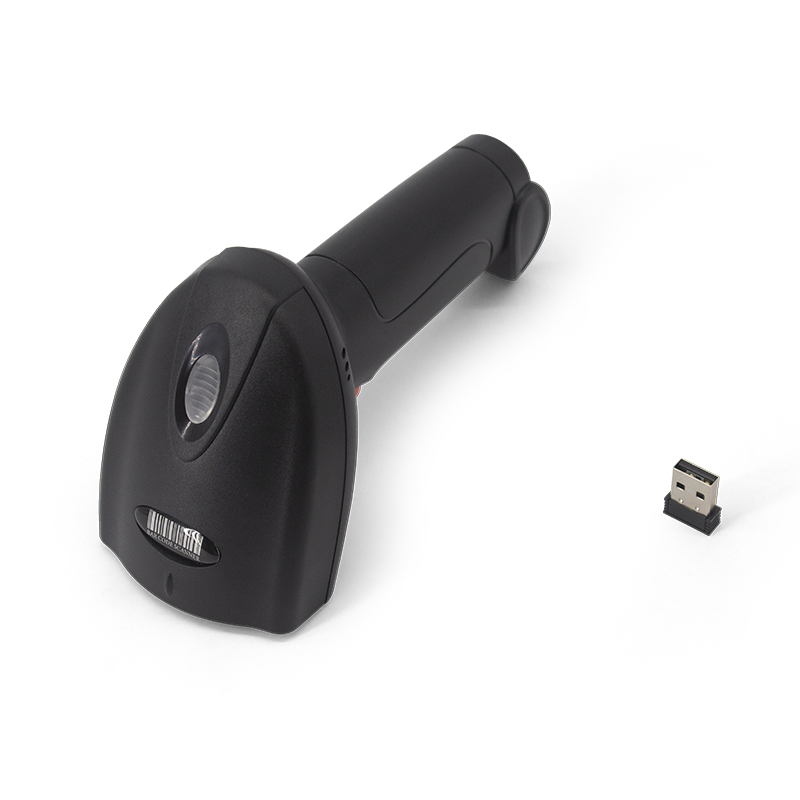
Our factory at Xiamen Peite Electronic Technology Co., Ltd. produces Barcode Scanners for retail environments with the decoding format support and the scan speed that checkout lanes require. We test the scanner against the UPC and EAN symbol families, the Code 128 weight labels, and the QR codes used in digital engagement. The goal is to provide a scanner that reads the formats the retail workflow uses, at the speed the workflow demands.


2. Which 1D Symbologies Remain Essential in Industrial Environments?

Industrial environments have not abandoned 1D barcodes. In many factories, warehouses, and logistics operations, the 1D symbol is still the most practical choice because it is durable, easy to print, and easy to read at a distance. The three 1D symbologies that remain essential are Code 39, Code 128, and Interleaved 2 of 5. Each has a different character set and a different density, and each is used for a different purpose. The table below summarizes their industrial roles.

Symbology Character Set Typical Industrial Use Scanner Consideration
Code 39 Numeric, uppercase letters, some symbols Asset tags, work-in-progress labels, tool tracking Wide symbol, tolerant of print defects
Code 128 Full ASCII Shipping labels, component traceability, high-density data High-density decoding, good print quality required
Interleaved 2 of 5 Numeric only Carton labels, pallet labels, logistics Even number of digits, quiet zone control

Code 39 is the workhorse of industrial labeling. It is wide and tolerant of print defects, which makes it suitable for asset tags that are printed on durable materials and applied to metal or plastic surfaces. Code 128 is the density leader. It can encode the full ASCII character set in a compact symbol, which makes it suitable for shipping labels that contain part numbers, quantities, dates, and serial numbers. Interleaved 2 of 5 is the logistics standard. It is numeric only and is used for carton and pallet labels where the data is a simple number such as a purchase order or a carton ID.

The industrial scanner must support these three formats, and it must support them under industrial conditions. The labels may be printed on matte paper, glossy synthetic stock, or direct-printed corrugated cartons. The scanner may be mounted on a forklift, a conveyor, or a handheld unit used at a distance. It may need to read the label through a plastic bag, a layer of dust, or a partial obstruction. A scanner that decodes the format in a laboratory may still fail in the plant if the optical path is not designed for the industrial environment. Our factory at Xiamen Peite Electronic Technology Co., Ltd. specifies Barcode Scanners for industrial use with the 1D decoding support and the optical performance that the plant conditions require. We work with our customers to confirm the label material, the reading distance, and the ambient conditions before the scanner is selected.

For a buyer, the 1D format list is the first specification, and the environmental performance is the second. A scanner that supports Code 39, Code 128, and Interleaved 2 of 5 is a good starting point. A scanner that supports these formats with the right depth of field, the right ambient light rejection, and the right durability rating is the correct choice for the plant. The procurement team should ask the supplier for the decoding format list and the environmental specification together.


3. How Do 2D Codes Change the Scanner Specification?

2D codes change the scanner specification because they require an imaging engine rather than a laser scan line. A 1D laser scanner sweeps a beam across the symbol and measures the reflected light to determine the bar and space widths. A 2D imager captures a picture of the symbol and processes the image to decode the data. The imaging approach supports Data Matrix, QR Code, PDF417, Aztec, and MaxiCode, and it also supports 1D formats through software decoding. The table below compares the imaging requirement for the major 2D formats.

2D Format Typical Application Imaging Requirement
Data Matrix Electronics, automotive parts, medical devices High-resolution imaging, small module capability
QR Code Consumer engagement, digital receipts, logistics Standard imaging, error correction support
PDF417 ID cards, transport documents, inventory labels Wide-area imaging, multiple row decoding
Aztec Transport tickets, mobile boarding passes Imaging with precise alignment
MaxiCode Package sorting, high-speed logistics Imaging with high-speed motion tolerance

The imaging requirement is not only about the format. It is also about the module size. A Data Matrix code on a small electronic component may have modules as small as 0.1 mm, which requires a high-resolution imager and a close working distance. A QR code on a poster may have modules of 1 mm or more, which can be read by a standard imager from a greater distance. The scanner specification should state the minimum module size and the working distance range for each 2D format. A scanner that reads a QR code on a poster may not read a Data Matrix code on a circuit board.

Our factory at Xiamen Peite Electronic Technology Co., Ltd. produces Barcode Scanners with 2D imaging engines for Data Matrix, QR, PDF417, and other formats. We specify the resolution, the depth of field, and the motion tolerance for each model. The goal is to provide a scanner that reads the 2D formats the application uses at the module size and the distance the application requires.

For a buyer, the 2D format list is only half of the specification. The other half is the imaging performance: resolution, depth of field, and motion tolerance. A scanner that supports Data Matrix but cannot resolve the small modules on the part will fail in the field. The procurement team should ask for the minimum module size and the working distance for each format, and should test a sample code before the order is placed.


4. What Makes DPM Codes Hard to Read and Which Decoder Features Help?

DPM stands for direct part marking. The code is applied directly to the surface of the part by laser etching, dot peening, electrochemical etching, or inkjet printing. The code is not printed on a label. It is part of the surface, and its contrast depends on the surface finish, the lighting angle, and the marking method. This is why DPM codes are harder to read than label-based codes. A laser-etched code on a polished metal part may have low contrast and a specular reflection that confuses a standard imager. A dot-peened code on a cast surface may have irregular dot shape and a rough background. The table below summarizes the DPM challenges and the decoder features that address them.

DPM Challenge Effect on Reading Decoder Feature
Low contrast Symbol blends into background Advanced image enhancement, adaptive thresholding
Specular reflection Glare obscures the symbol Diffuse lighting, polarization, multi-light capture
Irregular dot shape Module boundaries are unclear Morphological processing, dot-center detection
Rough surface Background noise interferes with the symbol Noise filtering, region-of-interest isolation
Curved surface Distortion across the symbol Geometric correction, multi-frame stitching

The decoder features that help with DPM are not the same as the features that help with label-based 2D codes. A standard QR decoder assumes a high-contrast, flat symbol. A DPM decoder must handle low contrast, irregular dots, and reflective surfaces. Some scanners include specialized DPM decoding algorithms and multi-light illumination to address these challenges. Others rely on external lighting and a standard imager. The scanner specification should state whether the decoder is optimized for DPM and which illumination options are available.

Our factory at Xiamen Peite Electronic Technology Co., Ltd. produces Barcode Scanners with DPM decoding capability for industrial traceability. We test the scanner against laser-etched, dot-peened, and electrochemical-etched codes on metal and plastic surfaces. The goal is to provide a scanner that reads the DPM codes the application uses, not just the label-based 2D codes that are easy to read.

For a buyer, the DPM question should be asked early in the specification process. If the parts are marked with DPM codes, the scanner must have the decoding capability and the illumination options that DPM requires. A standard 2D imager may read some DPM codes under ideal lighting, but it will not be reliable across the range of surfaces and marking methods in a production environment. The procurement team should request a sample test on the actual parts before the order is placed.


5. Which Formats Should Buyers Specify for Mixed Retail and Industrial Deployments?

A mixed retail and industrial deployment is common in organizations that operate both a customer-facing store and a back-of-house warehouse or production area. The scanner must support the retail formats for the checkout and the industrial formats for the warehouse. The decision is not always to buy a single scanner that supports everything. It may be more economical to buy a retail scanner for the checkout and an industrial scanner for the warehouse. The table below provides a decision matrix for mixed deployments.

Deployment Scenario Required Formats Recommended Scanner Type Procurement Note
Retail checkout only UPC, EAN, Code 128, QR Retail 2D imager Optimize for speed and ergonomics
Warehouse only Code 39, Code 128, ITF, Data Matrix Industrial 2D imager Optimize for distance and durability
Retail plus warehouse Full retail and industrial set Two scanner types or a versatile 2D imager Evaluate the cost of one versatile unit versus two specialized units
DPM traceability Data Matrix, QR, DPM codes Industrial DPM scanner Requires specialized decoder and lighting

The decision matrix should be combined with a cost analysis. A versatile 2D imager that supports all the formats may cost more than a retail scanner, but it eliminates the need to buy and maintain two device types. A specialized retail scanner may be faster and more ergonomic at the checkout, but it may not be suitable for the warehouse. The buyer should evaluate the total cost of ownership, including the purchase price, the maintenance, the training, and the downtime.

Our factory at Xiamen Peite Electronic Technology Co., Ltd. produces Barcode Scanners for both retail and industrial applications, and we can advise on the scanner type for a mixed deployment. We also provide the decoding format list, the imaging specification, and the environmental rating for each model. The goal is to help the buyer select the scanner configuration that meets the application requirements at the lowest total cost.

For a buyer, the specification should state the required formats, the label or marking conditions, the reading distance, and the environmental conditions. The supplier should provide the decoding format list and the performance data for each format. A supplier that provides only a generic format list without the performance data is a supplier that is leaving the application risk to the buyer. The procurement team should request a sample test on the actual codes before the order is placed.


6. Frequently Asked Questions (FAQ)

Question 1: Can a 2D imager read all 1D barcodes as well?

Answer: Most 2D imagers include software decoding for the common 1D formats, including UPC, EAN, Code 39, Code 128, and Interleaved 2 of 5. The performance depends on the imager resolution and the software. A high-resolution 2D imager can read both 1D and 2D formats, which makes it a versatile choice for mixed environments. The buyer should confirm the 1D format list and the reading distance for the specific model.

Question 2: What is the difference between a retail scanner and an industrial scanner?

Answer: A retail scanner is optimized for speed, ergonomics, and the UPC and EAN formats used at the checkout. It is designed for a clean, well-lit environment and a short reading distance. An industrial scanner is optimized for durability, reading distance, and the Code 39, Code 128, Interleaved 2 of 5, and Data Matrix formats used in warehouses and production areas. It is designed for dust, moisture, vibration, and a longer reading distance.

Question 3: Why does a DPM code require a different scanner than a printed label?

Answer: A DPM code is marked directly on the part surface, so it may have low contrast, specular reflection, irregular dot shape, and a rough background. A standard 2D imager assumes a high-contrast printed label. A DPM-capable scanner includes specialized decoding algorithms, adaptive image enhancement, and multi-light illumination to handle the DPM conditions. The buyer should confirm the DPM capability and test the scanner on the actual parts.

Question 4: What is the minimum module size a barcode scanner can read?

Answer: The minimum module size depends on the imager resolution and the working distance. A high-resolution imager can read modules as small as 0.1 mm at a close working distance. A standard imager may require a module size of 0.2 mm or larger. The scanner specification should state the minimum module size for each 2D format, and the buyer should test a sample code at the intended working distance.

Question 5: Should I buy one versatile scanner or two specialized scanners for a mixed retail and industrial deployment?

Answer: The choice depends on the cost and the performance requirements. A versatile 2D imager that supports both retail and industrial formats may cost more than a retail scanner, but it eliminates the need to buy and maintain two device types. A specialized retail scanner may be faster and more ergonomic at the checkout, but it may not be suitable for the warehouse. The buyer should evaluate the total cost of ownership, including the purchase price, the maintenance, the training, and the downtime, before making the decision.


7. Conclusion

The decoding format is the first specification in any Barcode Scanner selection. Retail applications require UPC, EAN, Code 128, and QR support, with the speed and ergonomics of the checkout lane. Industrial applications require Code 39, Code 128, Interleaved 2 of 5, Data Matrix, and DPM decoding, with the durability and reading distance of the plant floor. A mixed deployment requires either a versatile 2D imager or two specialized scanners, depending on the cost and performance trade-off. For procurement teams, the key is to specify the required formats, the label or marking conditions, the reading distance, and the environmental conditions, and to verify the scanner against the actual codes before the order is placed. Our factory at Xiamen Peite Electronic Technology Co., Ltd. produces Barcode Scanners for retail and industrial applications, and we provide the decoding format list, the imaging specification, and the performance data that buyers need to make a confident selection. If you are sourcing scanners for a retail or industrial project, contact our team to discuss your format requirements and to request samples for testing.


Contact Xiamen Peite Electronic Technology Co., Ltd. today to discuss your Barcode Scanner requirements and to request the decoding format and performance data for your application.

Related News
Leave me a message
X
We use cookies to offer you a better browsing experience, analyze site traffic and personalize content. By using this site, you agree to our use of cookies. Privacy Policy
RejectAccept