News

News

How Does a Barcode Scanner Work?

2025-09-17 0 Leave me a message

In today’s fast-paced retail, logistics, and manufacturing industries, the barcode scanner has become an essential tool for improving accuracy and efficiency. Understanding how a barcode scanner works helps businesses select the right solution and maximize productivity. At Peite, our factory designs high-performance scanners that combine advanced technology with user-friendly features. This article explains the working principle, outlines detailed product specifications, and answers common questions about barcode scanners.


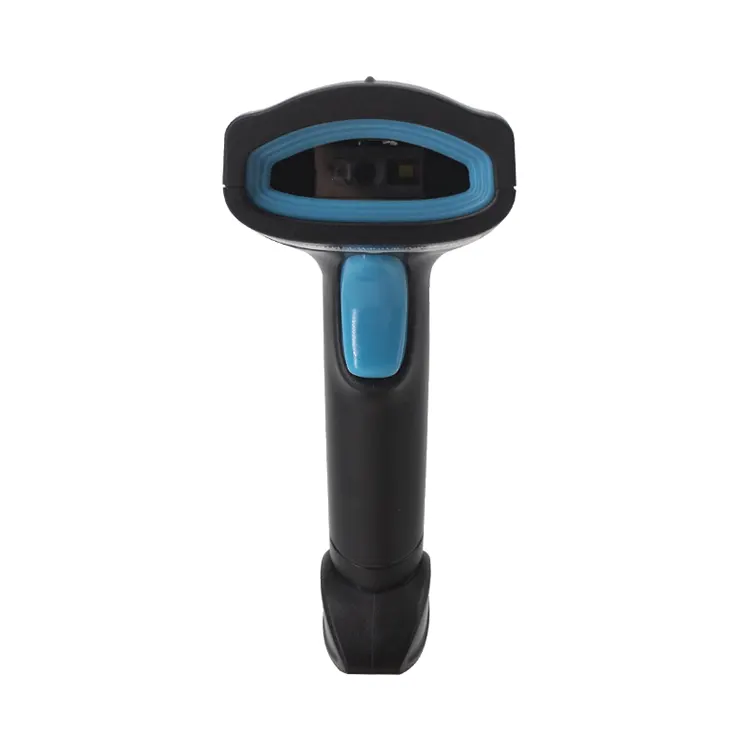
wireless barcode scanner


The basic working principle of a barcode scanner

A barcode scanner works by capturing the pattern of black and white lines or squares that represent encoded information. The process generally involves three stages:

1. Illumination: The scanner projects a light source, often LED or laser, onto the barcode.

2. Reflection: The white areas of the barcode reflect more light, while the black areas absorb light. The sensor detects these variations.

3. Decoding: The sensor converts the light signals into electrical signals, which are then processed by the decoder and transferred as digital data to a computer system.

Our technology ensures that scanning is accurate, even in low-light conditions, on curved surfaces, or with damaged labels. This is where Peite stands out in delivering reliability to global customers.


Detailed product parameters

Our factory offers barcode scanners that are designed for diverse applications. Below are the main specifications of our products:


Parameter Specification
Scanning Technology 1D Laser / 2D CMOS Image Sensor
Resolution ≥ 3 mil
Light Source 650nm visible laser diode / White LED
Scanning Speed 200 scans per second (1D) / 60 fps (2D)
Interface USB, RS232, PS2, Bluetooth
Operating Voltage DC 5V ± 10%
Operating Temperature -20°C to 50°C
Housing Material ABS + PC Industrial Grade Plastic
Drop Resistance Withstands drops from 1.8 meters
Certifications CE, FCC, RoHS

With these specifications, our barcode scanners are suitable for supermarkets, warehouses, logistics centers, healthcare institutions, and production facilities. The durability and speed make our products trusted by businesses worldwide.


Why choose Peite barcode scanners

When selecting a scanner, quality and stability are critical. Our factory emphasizes strict quality control, from sourcing components to final assembly. Our barcode scanners are known for:

1. Fast decoding capability for both 1D and 2D codes

2. Strong anti-interference ability in various working environments

3. Ergonomic design for comfortable long-term use

4. Flexible connectivity with multiple interfaces

5. Long lifespan supported by industrial-grade housing

We believe that our investment in research and development ensures every product performs reliably in demanding conditions. With Peite, businesses can count on consistent scanning accuracy and extended service life.


Applications across industries

Our factory has supplied barcode scanners to diverse sectors. The versatility of these devices allows seamless integration into different workflows:

1. Retail: Fast checkout processes and inventory management

2. Logistics: Real-time tracking and warehouse automation

3. Healthcare: Patient identification and medication verification

4. Manufacturing: Component tracking and production line monitoring

By choosing our barcode scanners, businesses benefit from streamlined operations and minimized errors, ultimately improving overall efficiency.


FAQ: How does a barcode scanner work?

Q1: How does a barcode scanner work in a retail environment?

A1: In retail, a barcode scanner projects light onto a product’s label. The reflected light is captured by the sensor, and the embedded information is decoded into product details. This allows cashiers to process sales quickly, while the system updates inventory records in real time.

Q2: How does a barcode scanner work with different code types?

A2: Barcode scanners are designed to handle both 1D and 2D codes. A 1D laser scanner reads linear codes by detecting line patterns, while a 2D image-based scanner uses a camera and decoding algorithm to interpret QR codes and Data Matrix codes. Our factory offers models capable of reading both formats seamlessly.

Q3: How does a barcode scanner work when scanning damaged labels?

A3: Advanced scanners like ours use image processing technology to reconstruct incomplete or scratched codes. By analyzing contrast and pattern recognition, the device can successfully decode the data, reducing manual entry and saving time in demanding environments.


Why Choose Us?

Understanding how a barcode scanner works is essential for businesses seeking to improve efficiency and accuracy. Our factory provides durable and high-performance products that are trusted across industries. With Peite, you can count on scanners that deliver speed, reliability, and advanced decoding technology. For more information or to explore our full range of barcode scanners, contact Peite (Xiamen Peite Electronic Technology Co., Ltd.) today. Let our expertise and commitment to quality support your business success.

Related News
Leave me a message
X
We use cookies to offer you a better browsing experience, analyze site traffic and personalize content. By using this site, you agree to our use of cookies. Privacy Policy
Reject Accept